
INDUSTRIAL EQUIPMENT
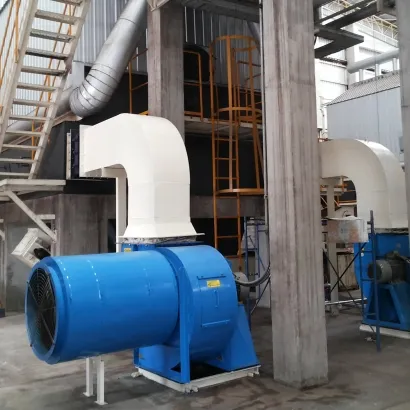
Forced Draught Fans
Model / SKU: —
Eurovent fan was designed specifically for demanding heavy-duty applications, including hot gasses and fumes, induced draft, process exhaust and light concentrations of solids in a variety of industries. We combine the advantages of the radial and backward inclined blades and replace the traditional light-duty exhauster with a more rugged, longer life span. It will handle moderate to high pressures and temperatures and has a high static efficiency. - Induced Draft fans The Induced Draught fan dr
Share the model, quantity and application so our team can confirm the selection.
Product details
Eurovent fan was designed specifically for demanding heavy-duty applications, including hot gasses and fumes, induced draft, process exhaust and light concentrations of solids in a variety of industries. We combine the advantages of the radial and backward inclined blades and replace the traditional light-duty exhauster with a more rugged, longer life span. It will handle moderate to high pressures and temperatures and has a high static efficiency. - Induced Draft fans The Induced Draught fan draws flue gases out of the boiler, through the air preheater, to maintain furnace conditions at just below atmospheric pressure. Control of furnace pressure is a critical safety consideration. - Forced Draught The Forced Draught fan moves cold air through the air preheater into the boiler. This air provides the oxygen used in the boiler combustion process. The FD fans have to supply large quantities of low pressure air to the boiler. Process characteristics will tend require large diameter, slow running, double inlet fans, with airfoil profile blades. - Primary air On coal and biomass fired boilers the Primary air fan moves air through the air preheater. The hot air exiting the preheater is mixed with the pulverized fuel and the air flow conveys this fuel/air mix to boiler combustion chamber. Oil fired boilers do not require primary air fans. Primary air fans often have impellers with backward curved plate or aerofoil bladed designs and as the volume flow requirement is comparatively low they are usually of a single inlet design. To be able to carry the fuel into the boiler the fan pressure requirement is relatively high. - Cold primary air fans operate with relatively clean ambient air. The use of cold air means that for a given mass flow of air into the boiler, the fan does not need to move as high a volumetric flow as a hot PA fan. This leads to a smaller fan size The process of pressurizing the air in the preheater encourages leakage of the air into the gas stream. This portion of the air is lost into the flue gas exiting the plant, which reduces the boiler efficiency. - Hot Primary Air fans operate with hot air coming out of the air heater. Using a hot primary air fan has the advantage of reducing the leakage of air into the gas stream within the preheater. As the air is hot, it has a lower density and the fan will have to move a large volume flow to maintain the mass flow required by the boiler combustion process. This means the fan needs to be slightly larger than a cold PA fan Hot primary air fans also have to be designed to resist abrasion as the hot air will now contain erosive dust particles that have been carried over into the air by the air heater. - Secondary air The secondary air fan takes air from the same sources as the Primary Air fans, however in this case the air is supplied into the boiler combustion chamber above the grate. This air creates a turbulent condition over the fuel, enhancing combustions and providing an additional oxygen source to help complete the combustion process. - Gas Recirculation Gas Recirculation fans are not always fitted to a boiler. This fan re-circulates combusted flue gas from the back end of the boiler or economizer through a dust collector and delivers the gas back to the boiler. The re-circulated gas is introduced either into the immediate vicinity of the initial burning zone of the boiler to control steam temperature or the gas is introduced near to the boiler outlet to assist in the control the furnace gas temperature, in a process known as gas tempering.
Product questions
What is this product?
Forced Draught Fans is listed under Fans and blowers.
How can I request a price and confirm this model?
Enter the model, quantity and application in the quotation form, then send the prepared message by email or LINE to SPI using the contact details on this website. Confirm the price and model with the team before ordering.
Technical specifications
| Brand | Ask our team |
|---|---|
| Model / SKU | Forced Draught Fans |
| Category | Special-design fan |
Eurovent fan was designed specifically for demanding heavy-duty applications, including hot gasses and fumes, induced draft, process exhaust and light concentrations of solids in a variety of industries. We combine the advantages of the radial and backward inclined blades and replace the traditional light-duty exhauster with a more rugged, longer life span. It will handle moderate to high pressures and temperatures and has a high static efficiency. - Induced Draft fans The Induced Draught fan draws flue gases out of the boiler, through the air preheater, to maintain furnace conditions at just below atmospheric pressure. Control of furnace pressure is a critical safety consideration. - Forced Draught The Forced Draught fan moves cold air through the air preheater into the boiler. This air provides the oxygen used in the boiler combustion process. The FD fans have to supply large quantities of low pressure air to the boiler. Process characteristics will tend require large diameter, slow running, double inlet fans, with airfoil profile blades. - Primary air On coal and biomass fired boilers the Primary air fan moves air through the air preheater. The hot air exiting the preheater is mixed with the pulverized fuel and the air flow conveys this fuel/air mix to boiler combustion chamber. Oil fired boilers do not require primary air fans. Primary air fans often have impellers with backward curved plate or aerofoil bladed designs and as the volume flow requirement is comparatively low they are usually of a single inlet design. To be able to carry the fuel into the boiler the fan pressure requirement is relatively high. - Cold primary air fans operate with relatively clean ambient air. The use of cold air means that for a given mass flow of air into the boiler, the fan does not need to move as high a volumetric flow as a hot PA fan. This leads to a smaller fan size The process of pressurizing the air in the preheater encourages leakage of the air into the gas stream. This portion of the air is lost into the flue gas exiting the plant, which reduces the boiler efficiency. - Hot Primary Air fans operate with hot air coming out of the air heater. Using a hot primary air fan has the advantage of reducing the leakage of air into the gas stream within the preheater. As the air is hot, it has a lower density and the fan will have to move a large volume flow to maintain the mass flow required by the boiler combustion process. This means the fan needs to be slightly larger than a cold PA fan Hot primary air fans also have to be designed to resist abrasion as the hot air will now contain erosive dust particles that have been carried over into the air by the air heater. - Secondary air The secondary air fan takes air from the same sources as the Primary Air fans, however in this case the air is supplied into the boiler combustion chamber above the grate. This air creates a turbulent condition over the fuel, enhancing combustions and providing an additional oxygen source to help complete the combustion process. - Gas Recirculation Gas Recirculation fans are not always fitted to a boiler. This fan re-circulates combusted flue gas from the back end of the boiler or economizer through a dust collector and delivers the gas back to the boiler. The re-circulated gas is introduced either into the immediate vicinity of the initial burning zone of the boiler to control steam temperature or the gas is introduced near to the boiler outlet to assist in the control the furnace gas temperature, in a process known as gas tempering.
The checked content does not provide model-specific technical values. Request specifications and confirm the variant before ordering.
Request product specifications ↗Documents & catalogs
The source catalog has no attached document for this record.
Request product documentation ↗Source references
MCG Trading · Source catalog ↗Related reading

Duct sizing with Equal Friction
Duct sizing with ( Equal Friction) Equal Friction is a duct-sizing method that keeps the pressure loss from friction per unit duct
Read article ↗
Design and installation of air duct systems (Duct Design)
Design and installation of air duct systems (Duct Design) Design air ducts for air conditioning systems. Why do you need to "reduc
Read article ↗Low Noise Duct Design
Low Noise Duct Design is a matter of controlling air speed + pressure + vibration + selecting equipment. From the origin to the di
Read article ↗Related equipment


All related articles (67)
- Department store bathrooms with air conditioning have to think about 2 at the same time to suck out odors and moisture.
- What is the Aspect Ratio of the air duct?
- How to design air ducts (Duct Design) according to international standards
- Calculation of large meeting room air conditioning systems (High Density Occupancy)
- Standards for air speed in ducts (Duct Velocity)
- Air conditioning system (negative pressure room)
- Summary of professional guidelines for reducing pressure drop
- Air conditioning system "negative pressure room"
- Choosing an air distributor (Air Diffuser / Grille / Register)
- What is External Static Pressure (ESP) and how important is it?
- Procedure for measuring ESP (External Static Pressure) at Fan In / Fan Out
- Balancing air volume is the most important thing in cleanroom work.
- Creating a positive pressure room (Positive Pressure Room) is the heart of HVAC system work.
- Round pipe or square pipe, which one is best to use for HVAC design?
- How to calculate the size of a ventilation fan for a factory with a height of 6 meters, simple and practical.
- Cleanroom Design
- Fresh Air Supply Methods
- What are System Effects?
- In-depth look at factory fan types: Axial vs Centrifugal, which one is right for your job?
- The reason why Centrifugal Fan "wind does not reach as designed"
- Analysis of Condensation at the Air Pipe
- System effect of the fan (Fan)
- Design of air conditioning and ventilation systems for food court areas in department stores.
- Principle of “Adjusting the air volume of the VAV system (Variable Air Volume)”
- Balancing pressure for clean rooms
- Design of air conditioning system for isolation room (Isolation Room)
- Design of air conditioning system for large meeting rooms
- Selecting the size of the air diffuser (Air Diffuser)
- Air conditioning units must have “Fill in fresh air (Fresh Air)”
- Namsae Trading ventilation fan, strong wind, durable, cool factory.
- Relationship between Flow Rate and Pressure Drop
- Calculating Louver size for Fresh Air Intake
- Formation of water droplets on the surface of cold water pipes in air conditioning systems.
- Factory fan, high wind power Namsae Trading
- Design of a fire escape air compressor system (Stair Pressurization System)
- Adjusting the air balance in a rectangular duct system (Rectangular Duct)
- industrial fan
- Calculation of air volume CFM (Cubic Feet per Minute)
- Duct Design
- Air duct work (ductwork)
- ACH stands for Air Changes per Hour.
- Positive Pressure Room
- What is the Static pressure value in the Air Nozzle Catalog?
- Fan Fan
- How are PIP ventilation pipes better than galvanized pipes?
- How to cool down the factory space?
- Why improve working conditions for employees? Operators are therefore important.
- How can air changes improve factory air quality?
- A cost-effective and efficient way to cool a factory
- How good is a ventilation fan? Which type is appropriate to use?
- Useful Facts about Industrial Fans
- An Exhaust Fan: a Useful Household Appliance
- Basic ventilation airflow calculations
- 5 ways to use fans while saving electricity
- Industrial fans, blowers and ventilation systems for workers' quality of life
- Ventilation basics
- Notes on ventilation in industrial systems
- The difference between fans and blowers
- Benefits of ventilation systems
- 9 tips for inspecting and maintaining blower fans
- Tips for managing heat inside buildings
- Selecting Fans and Blowers: Information to Prepare before Comparing Models
- Managing Heat in Buildings and Factories
- Installing Factory Ventilation Fans